


Juri Sudheimer on the Specifics of 4T Motorcycle Oils: How One Product Combines Opposing Properties
Motorcycle oils are a universe of their own within the lubricants industry. Many car owners who switch to a motorcycle make a common mistake: they pour in the same automotive oil they are used to. The result is predictable—clutch issues, accelerated gearbox wear, and overheating.
“When we began developing the MANNOL motorcycle oil line more than 20 years ago, the first thing I realized was that this was a completely different engineering challenge,” recalls Juri Sudheimer, founder of SCT Group and owner of manufacturing facilities in Klaipeda (Lithuania) and Dubai (UAE). “A motorcycle engine is a compact unit where the oil must simultaneously function as both engine and transmission lubricant, possessing both frictional and anti-friction properties. It’s like creating a material that is both hard and soft at the same time—a paradox requiring a technological solution.”

Today, SCT Group products under the brands MANNOL, PEMCO, CHEMPIOIL and FANFARO are used by motorcyclists in more than 160 countries—from Harley-Davidson cruiser enthusiasts to professional racers on sport tracks.
Motorcycle oils exist for a reason: their characteristics are directly linked to the design of motorcycle engines. Built for lightness and compactness, they combine the engine, gearbox, ignition distributor, generator, and other systems into one dense block. One oil must lubricate this entire assembly, performing the functions of both motor and transmission oil while simultaneously delivering frictional and anti-friction performance.
Motorcycle oil must perform the following functions:
— Protect components from mechanical wear
— Seal gaps between moving parts
— Prevent corrosion
— Dissolve soot and deposits and remove them from friction zones
— Cool valves, pistons, and cylinder walls
— Help control emissions
Most modern motorcycles, including heavy and high-power models, are equipped with four-stroke engines. The primary function of 4T oils is lubrication. Their key quality criterion is behavior with a wet clutch, where the clutch operates in the same oil bath as the engine. Here, anti-friction properties, high anti-scuff performance, and low foaming are critical—hence, 4T oils contain a more complex additive package.
Why immerse the clutch in an oil bath at all? It’s obvious that oil reduces friction. Yes—the friction coefficient drops by 20–50%, but clutch life increases dramatically, partly because the oil acts as a coolant. The lost friction can be compensated for with friction modifiers.
A motorcycle clutch consists of special discs made of various materials—alternating metal and non-metal friction discs, metal discs with friction pads, or fully composite friction plates. Modern friction materials are typically composites made of:
- Base materials: cellulose, Kevlar, graphite, or metal-ceramic
- Fillers: silica, barite, graphite
- Binders and sometimes metallic components
Ceramic clutch discs are also growing in popularity.
This diversity of friction materials presents a serious challenge for oil developers. “In our laboratories in Klaipeda and Dubai, we test compatibility with dozens of friction material types,” notes Juri Sudheimer. “The oil must perform equally well with classic cellulose materials and modern ceramics.”
Clutch discs operate in conditions of metal-to-non-metal or non-metal-to-non-metal friction, while gearbox gears—made of steel—experience metal-to-metal contact.
Clutch disc temperatures often exceed the oil’s bulk temperature, reaching 100–120°C or even 130°C under extreme loads due to intense friction and torque transfer. Meanwhile, oil temperatures in the gear mesh typically range from 56°C to 83°C, below the oil’s flash point.

From these factors arises the additive concept for 4T motorcycle oils: a combination of friction and anti-friction additives that are compatible with each other and activate under different temperatures or material interactions.
For example:
- In gearbox gears (metal-to-metal contact), anti-friction additives activate, while friction additives do not.
- In clutch discs (metal-to-non-metal or non-metal-to-non-metal contact), friction additives activate, while anti-friction additives remain inactive.
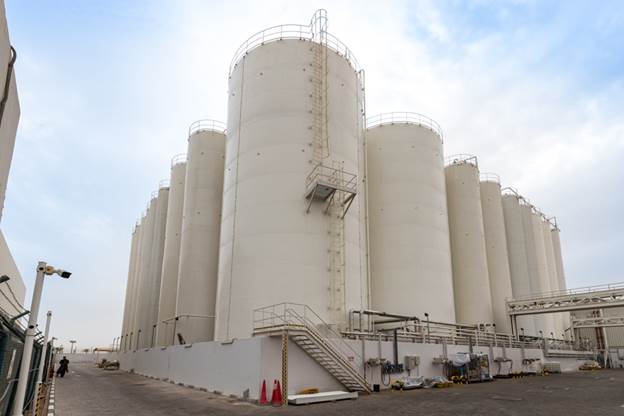
“Creating such a balanced additive package is the result of years of research and significant investment,” emphasizes Juri Sudheimer. Since 2004, SCT Group has invested over €90 million into production development, and in 2024 alone, allocated €3 million to R&D. The SCT Chemicals FZE plant in Dubai, employing 188 specialists, is equipped with advanced laboratories for testing oil friction characteristics. Special test stands simulate wet clutch operating conditions under various temperatures and loads.
Our production capacity allows us to manufacture up to 140,000 tons of lubricants per year, including a full range of motorcycle oils. ISO 9001, 14001, 45001, and 17025 certifications confirm compliance with international quality standards.
This is why 4T oils do not use conventional friction modifiers typical for automotive engine oils—they can cause clutch slippage. At the same time, specialized anti-friction components provide enhanced wear protection, critical for high-RPM motorcycle engines. Optimized levels of phosphorus-based anti-wear additives protect camshafts and the cylinder-piston group.
Since the oil also lubricates the gearbox, polymer viscosity modifiers degrade faster. Therefore, only shear-stable viscosity improvers are used to ensure that viscosity is maintained throughout the service interval.
Mineral oils, though outdated, are still used in summer operation in vintage engines, dry-clutch motorcycles, and some V-twin engines.
Semi-synthetics and hydrocracked oils are mainly used in modern small-displacement motorcycles:
MN7860 4-Takt Power Plus 15W-50, MN7202 4-TAKT PLUS 10W-40, MN7209 4-TAKT PREMIUM 20W-40, MN7830 MOTORBIKE 4-TAKT HD 20W-50.
Full synthetics are used in high-performance engines:
MN7834 Motorbike 4-Takt 5W-40, MN7812 Motorbike 4-Takt 10W-40, MN7814 4-Takt 10W-50, MN7832 Powerbike 4-Takt 15W-50, MN7815 4-Takt 10W-60, and the specially developed MANNOL 7808 V-Twin 20W-50 for Harley-Davidson engines.
“Developing a specialized oil for Harley-Davidson was a special project,” says Juri Sudheimer. “V-Twin engines have a unique air-cooled design and operate at elevated temperatures. We spent two years selecting base oils and additives to create a product capable of withstanding the extreme conditions of these legendary engines.”
Given the compact layout of motorcycle engines, oil temperatures can reach critical levels. Therefore, 4T oils contain enhanced antioxidant packages and are based on high-quality Group II, III, and IV base oils to ensure thermal and oxidative stability.
For piston and ring cleanliness, specialized detergents (calcium or magnesium-based) and modern high-temperature dispersants are used, ensuring both engine cleanliness and smooth clutch and gearbox performance.
Why you should not use regular automotive oil in a motorcycle:
— Motorcycle oils have different friction characteristics
— Higher viscosity and greater resistance to heat and foaming
— Higher flash point and lower volatility
— Lower alkalinity and ash content
— No aggressive additive “cocktails” found in automotive oils, which can damage motorcycle components
— Different operating conditions:
a) Motorcycles operate at higher RPM → oil must provide superior anti-wear protection
b) Oil heats up more → requires stronger oxidation resistance
c) Mostly used in warm seasons → no need for extreme cold-flow properties
JASO classification for 4T motorcycle oils
The Japanese JASO M standard divides oils into three classes:
- MB – low-friction oils, unsuitable for wet clutches
- MA – medium-friction oils for wet clutches under moderate loads
- MA2 – highest friction level, ideal for sports motorcycles and heavy loads
MA correlates roughly with API SG, and MA2 with API SL–SM.
MA oils are mainly for urban riding with frequent acceleration and braking; they contain reinforced anti-oxidation and anti-foam components.
MA2 oils suit off-road and high-power engines, offering superior water separation, viscosity retention, and enhanced anti-corrosion and shock-load protection.
Which oil should you choose?
The main rule: follow the specifications in your motorcycle manual.
You can easily select suitable MANNOL oil using SCTApprovalControl—in the Search via specification section, choose viscosity and JASO/API standards to find the correct product.
“Motorcycle oils reflect our philosophy: understand the specifics of the machinery and create solutions that truly work,” concludes Juri Sudheimer. “Over more than 30 years in the industry, I’ve seen motorcycles evolve—from simple carbureted models to today’s highly tuned engines with electronic injection. Our oils have evolved with them.”
SCT Group’s total production capacity exceeds 1 million liters per day, with tank storage exceeding 60 million liters and a portfolio of more than 500 products. But the most important achievement is the trust of riders worldwide—from European touring riders on BMWs to Japanese sportbike enthusiasts on Suzukis, from American Harley cruisers to Middle Eastern desert enduro riders.
Your motorcycle deserves oil made specifically for it. Don’t compromise—choose the right motorcycle oil, and your machine will reward you with reliability and longevity.

How Personalized Web Experiences Will Change In The Future Due To Artificial Intelligence

MBRSC Announces Commencement Of Environmental Testing Of MBZ-SAT

The UAE’s Net Wealth Hits Record High, Reaching $3.12 Trillion In 2024
About The Author