


When Should You Replace Your Pickleball Racket?
You don’t always notice when your equipment is starting to let you down. A few more unforced errors, a ball that doesn’t come off the face quite as expected, or a handle that feels less secure can seem like normal parts of playing. But sometimes, they’re signs that your equipment has reached the end of its useful life.
So, when should you replace a pickleball racket? There’s no fixed calendar date. How often you play, how hard you play, how you store your equipment, and the condition of the hitting surface all matter. A recreational player may get considerably more use from one than someone playing several competitive matches every week.
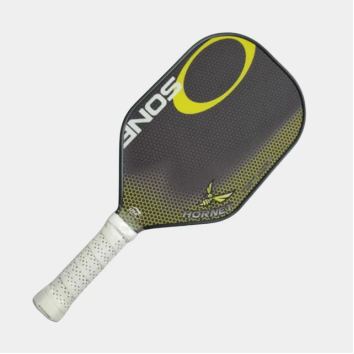
Signs That You Need to Change Your Racket
1. You Can See Cracks or Structural Damage
Visible damage is the easiest warning sign to spot.
Check the face, edges, handle connection and edge guard regularly. Small cosmetic marks aren’t automatically a reason to replace the equipment. A crack that extends into the playing surface is different.
USA Pickleball’s equipment standards specifically address defects such as cracks, holes and other irregularities on the hitting surface. Its testing programme also includes methods for identifying delamination, where layers within the construction begin to separate.
If you can see or feel structural damage, don’t keep playing simply because the equipment still produces a decent shot.
2. The Face Starts Feeling Different
Does the same swing suddenly produce a different result?
You might notice less predictable contact, changes in power, or a different response when hitting the ball near the centre and toward the edges. That’s worth paying attention to.
Equipment can change gradually through repeated impact. For a club player, inconsistency can be frustrating. For a competitive player, it can become a real problem because you need to trust how the face responds from one rally to the next.
3. Delamination Has Started
Delamination isn’t always obvious at first.
It refers to separation between layers of the paddle’s construction. You may notice a bulge, unusual sound, soft spot, distortion or a sudden change in how the ball comes off the face.
If something looks or sounds unusual after months of regular play, inspect it rather than assuming it’s just wear and tear.
4. The Grip No Longer Feels Secure
Your hand shouldn’t have to fight the handle.
If the grip has become compressed, slippery, torn or loose, start by checking whether a replacement grip or overgrip solves the problem. You don’t necessarily need a new paddle just because the grip has worn out.
However, if the handle itself is damaged or the connection between the handle and frame feels unstable, that’s a different matter. Continuing to use damaged equipment isn’t worth the risk of losing control during a fast exchange.
For frequent players, grip condition is worth checking every few sessions. Sweat, heat and repeated use can change how secure the handle feels.
5. Your Game Has Changed
Not every replacement is caused by damage.
Maybe you started as a beginner using a forgiving, lightweight model. Six months later, you’re playing twice a week, hitting harder and taking more balls at the kitchen line. Your needs may have changed.
A player developing better technique might start looking for a different balance between control, stability and power. Someone moving into competitive play may also become more particular about shape, grip length, weight and surface characteristics.
In that situation, your old paddle isn’t necessarily bad. It simply may not match the player you’ve become.
6. Your Equipment Is No Longer Approved for Tournament Play
This matters if you compete in sanctioned events. Equipment rules can change as testing standards develop. For casual games, this may not affect your decision. For sanctioned competition, it can.
How to Choose the Best Pickleball Racket for You?
The best choice isn’t necessarily the newest or most expensive model. Start with how you actually play.
Start With Weight
Weight affects how the paddle feels during every swing.
A lighter model can feel easier to manoeuvre, particularly for beginners or players who value quick hand exchanges. Heavier options can provide a more solid feel through contact, but they also require you to be comfortable handling the additional mass.
Don’t choose by number alone. Hold the paddle if possible and pay attention to how quickly you can move it from one side to the other.
Think About Paddle Shape
Shape changes the balance between reach, hitting area and manoeuvrability.
An elongated design can provide additional reach, which may appeal to players who spend time defending deeper shots or covering more court. A wider shape can offer a larger-feeling sweet spot and may suit recreational players who want forgiveness.
There’s no universally correct shape. Your style decides.
Consider Core Thickness
Core thickness influences how the paddle feels at contact.
If you’re still developing your technique, don’t get too caught up in specifications. Comfort and predictable response matter more than chasing a particular number.
Check the Grip
Grip size and length deserve more attention than they usually get.
Your hand should feel secure without needing to squeeze excessively. The right grip can make quick adjustments feel more natural and reduce the temptation to over-tighten your hand during rallies.
Also consider grip length if you use a two-handed backhand or simply prefer more room around the handle.
Match the Equipment to Your Playing Style
Think about what actually happens during your games.
Are you usually at the kitchen line, looking for quick exchanges and controlled placement? Do you stay deeper and rely more on drives? Are you a beginner who wants forgiveness rather than maximum power?
Those answers are more useful than simply copying the equipment used by a professional player.
If you’re comparing options, TennisShop.ae can be a useful place to explore pickleball equipment while considering factors such as construction, shape, weight and intended playing style.
Don’t Ignore Certification for Competitive Play
If you enter sanctioned competitions, check the current approved list before buying.
USA Pickleball’s approved equipment database allows players to search by brand and model, which is particularly useful when regulations or equipment standards change.
That small check can save you from buying equipment that doesn’t meet the requirements for
the events you play.
Final Words
Replacing your equipment shouldn’t be based on a simple rule such as “buy a new one every year.” Look at its condition, how it feels in your hand, and whether it still suits the way you play.
For some players, a well-maintained paddle can remain useful for a long time. For others, frequent play and changing performance needs may call for an earlier replacement.
TennisShop.ae gives players a place to compare pickleball equipment based on their playing needs rather than simply chasing the latest release.

Legendary Gaming Entrepreneur Invests in Greenlite Ventures
e& UAE Securely Unlocks The Transformative Power Of AI For Businesses With Microsoft Copilot
Emirates Post Group Launches Commemorative Stamp To Celebrate Al Wathba Fossil Dunes Reserve In Abu Dhabi
About The Author